Welcome to Ulqin-Ulcinj / Montenegro
March 21, 2008 by Ulqini
Filed under Turizmi / Turizam
About Ulcinj .. Video.![]()
Ulcinj is one of the oldest towns at the Montenegrin coast.
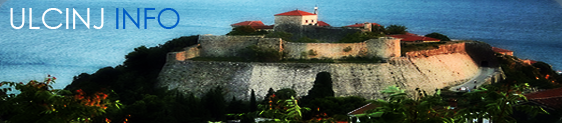
The old town is the southest city in Montenegro. Ulcinj center (Stari Grad) is surrounded with old walls and towers and it´s like an old castle over looking the sea. You will find in the old city local shops, cafés, restaurants and galleries in small romantic streets.
Arround the center of the old town Ulcinj was developed in the bay of the ” Little Beach “. With its natural charms, Ulcinj is perfect for tourism.
Ulcinj is considered to be a much warmer place compared to other towns on the Montenegrin coast. With 270 sunny days per year Ulcinj is one of Montenegro´s travel hot spots during the summer, autumn and spring season and is the centre of Ulcinj municipality of Montenegro with a total population of 27,000.
Ulcinj is a typical Mediterranean travel destination with old narrow streets, romantic bars and restaurants, small shops, antique monuments, churches, mosques and picturesque buildings.
Climate and Vegetation![]()
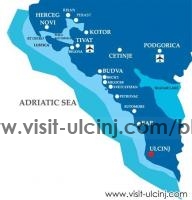
Ulcinj is like a sun resort. It is rich with subtropical Mediterranean and decorating plants like old olive trees, palm trees, agaves, cypresses, and mimosas.
During the winter the temperature at Ulcinjska Rivijera (Ulcinj Riviera) is mostly between 8 - 15 C and during summer between 25 - 34 Celsius.
The climate along Ulcinj is a typical Mediterranean one, with mild, rainy winters and hot and dry summers. Summer temperatures in July can rise up to 34°C to 36°C. 2700 hours of sunshine a year.
Flora and fauna in Ulcinj are similar to all other coastal towns in Montenegro. In Ulcinj there are thousands of olive trees along the beaches, palm trees, oleanders, mimosas and wild and domestic pomegranates, figgs, oranges, mandarins, grapes and lemon trees. Rare examples of flowers and decorative trees are cultivated there.
Ulcinj contains a large number of sandy and rocky beaches, offering their visitors privacy and pleasure. Talking about pleasure it is worth of mentioning “The Olive Love Tree”, growing in Ulcinj in over 80.000 trees. Huge insolation, summer temperature of 25 degrees in average, nice sand rich with minerals sumpor waters are making a great potential for health tourism.
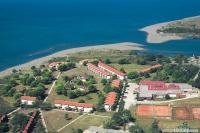
Ada Bojana
Some kilometers south from Ulcinj is a 13 kilometers long sandy beach which streaches till the mouth of the river Bojana , from where it continues 2.7 kilometers on Ada Bojana till the Montenegro-Albanian border.
Ada Bojana is popular among foreign tourists from Western Europe for its peace and unique atmosphere.
Ada Bojana, the splendid river island is dividing the delta of the ending river Buna into two forks and has a form of a triangular shape, and is also called triangle island. This beach exclusively reserved for nudists - also the biggest nddist colony in Montenegro.
It is close to 3.0 km long in the direction of the water flow, 1.8 km wide, and 3.4 m high. Two of the sides are washed by the fresh water of the river, and the third part of the triangle is a sandy beach and kisses the adriatic sea.
The right fork of Buna is bridged, connecting Ada with Great Beach. On the banks of this part of the river Buna were built wooden huts with strange fishing divaces-Kalimera, which make it look like an exotic area of the far east Ada, far away from the world, is a real oasis of peace and relaxation. Its absolute silence is distributed only by the chipping of rare birds and the breaking of waves. Its thick and lush vegetation makes it a special micro ecological world, the home of rare plants and rare animals.
The most beautiful restaurants are on the banks of the river
Pirates, Sailors and Traders![]()
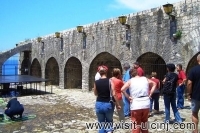
Ulcinj is also well known for his famous sailors. During the last centuries the most developed industry in Ulqini was trade and maritime affairs. Sailors used to import different products from overseas which they would exchange for the goods they were in need of. Ulqini has a long and rich maritime and merchant tradition.
The peak of seafaring was in 17th 18th and 19th centuries. Ulqini’s own merchant marine traded between the large ports and trading centers of the Adriatic, Levant and Mediterranean. They exchanged and shipped to Venice, Istria and Trieste, wool to Genoa, tobacco into many Adriatic ports. Ulcinj geographical location is between:
* Longitudes 19’8 and 19’23 east, and
* Latitudes 41’50 and 42’5 north.
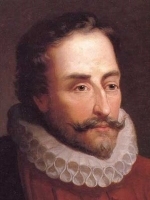
Ulcinj has been for many centuries a pirate nest. In Mala Plaza bay very close to Ulcinj, the pirates in 17th an and 18th century celebrated their victories, preparing halvah stirring it with oars, dividing their loot.
Miguel de Cervantes supposedly was held captive for five years. Legend says that he fellt in love with a woman who was the inspiration for Don Quixote’s lady love, Dulcinea.
One square in Ulcinj down town is called the “Slave Square” because the pirates from Ulcinj were trading in the 17th and 18th century black slaves from different African countries.
The beaches:
Ulcinj is famous for its sandy beaches like:
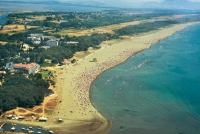
Velika Plaža (”Long Beach”), which is a 13 km long and the longest sand beach on the Adriatic coast. The beach is covered with fine sand which contains large quantities of iodine and salt minerals and is known to have healing effects for curing rheumatism and skin diseases.
Velika Plaza Beach Montenegro Ulcinj
The beach is located 4.5 km from the old town. It takes almost a 2.5 hour walk to discover the whole beach in one way. So make shure you get a lift back to the city by bus or taxi.![]()
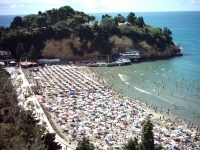
Mala Plaža -Little Beach:
At the very heart of the town the closest beach called ‘little beach’ is a 650m long swathe of sand. The Small Beach and its bay is situated between the points of Punta e Nuradinit (Punta Nuradinit) and Suka (Cap Ratislava).
Valdanos Beach:
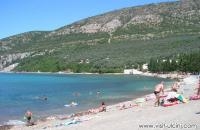
This Beach together with its background is a true olive reservation. It is covered with big pebbles as well as the sea bottom and in a mild semicircle it is pulled into the land.
There is a tourist settlement of bungalows surrounded by olive trees, as well as a restaurant in its background.
The beach is 400m long, and on its endings there are cliffs, distributed like vines what is a dream of every fisherman, diver and a researcher of sea depths. The sea is clean, dark green. The inlet winds are convenient for sailing.
History of Ulcinj:![]()
The town is believed to be founded in the 5th century BC by Greek colonists from Colchis. The Colchian colonization is mentioned in the 3rd century BC, in a poem by Apollonius of Rhodos.
The town is to be settled in the 5th century BC by Greek colonists from Colchis. The Colchian colonization is mentioned in the 3rd century BC, in a poem by Apollonius of Rhodos.
The wider area of Ulcinj start to populated in the Bronze Age. Illyrian tombs (tumuli), found in the village of Zogaj, in the vicinity of Ulcinj, are going back to the Bronze Age.
llyrians used to live in the region in that time, and under Greek influence they built incredible huge “Cyclopean Walls”. In Latin language, it was known as Olcinium or Ulcinium. In medieval times a shipwreck of a Saracen sailing boat beached there with African slaves. Some locals from Ulcinj saved the Africans and integrated the slaves into their community.


Ulqini on Fri, 21st Mar 2008 10:25 am
Ulqini enjoys a status as one of the oldest settlements on the Adriatic coast. From ancient times through the 19th century, Ulcinj’s geographic position made it a place for conquest.
Some conquerers stayed awhile, some stayed only a short time, but all left an influence of one kind or another.
A colorful chapter in Ulcinj’s past began in 1571, when the famous Spanish author, Miguel de Cervantes Saavedra, was imprisoned in Old Town Ulqin, a stay that last five years as he awaited his family’s payment of ransom to the pirates who had captured him. Dulcinea del Toboso, a focus of his great novel “Don Quixote” takes her name and origins from the former name of Ulcinj - Cita de Dolcino.
Ulqini on Fri, 21st Mar 2008 10:26 am
More About Ulqin History
It is believed that ancient Ulqini was founded in the 5th century B.C. by Greeks from Colchis, during colonization of the region. The Colchian colonization is mentioned in the 3rd century B.C. poem by Apollonius of Rhodos. Illyrians lived in the region at that time.
Under Greek influence they built immense Cyclopean Walls. These walls are the remains of the oldest habitation in today’s Old Town and Ulqini’s Cyclopean walls are the oldest of the kind along the Adriatic coast.
Ancient Colchinium became Olcinium in the 2nd century B.C., when the Romans took it over from the Illyrian tribe of Olciniates (163 B.C.). Under that name it is encountered in written sources for the first time in Pliny the Elder,in Naturalis Historia, and is also mentioned by Titus Livius. Under Romans Ulqini became a fortified oppdium-civium romanorum, and later a municipium- a city with self government.
Traces of oldest life in Ulqini were discovered on the shore of the lake “Liqeni Zogajsh”, on the locality of Ceret. When the ground was prepared for the construction of the salt flats, earth floors of bronze-age Illyrian settlements were found. From this period also date two earth burial mounds (tumuli), Illyrian tombs dating from their life in the lowlands. They were found on the village of Zogaj, on the Bregu i kuq locality. When the Illyrians left the lowlands because of danger of enemies and moved into the mountains, they used stone mounds for interment.
Ulqini has a long seafaring tradition,which peaked in the 17th, 18th, and 19th centuries. Ulqini’s own merchant marine traded between the large ports and trading centers of the Adriatic, Levant and Mediterranean.
Under the reign of the Turks (from 1570’s to the late 1870’s) the merchant marine of Ulqini was one of the main strengths of the Ottoman Empire in the Adriatic. During times of war, Ulqin’s port and ships were sought for use by Turkey, but Ulqini’s semi-independence limited participation.
According to chroniclers from the time, in the 17th century Ulqin’s fleet included more than 500 two-master ships that sailed throughout the Mediterranean.
The inhabitants of the town were not only skilled sailors but fine good shipbuilders as well. The French consul in Shkodra, Hecquard, wrote that Ulqini maintained a shipyard that could construct and outfit ships of as much as 200 tons. Local builders were often joined by shipbuilders from Dubrovnic and Korcula.
One of the most interesting aspects of Ulcinj’s history occured just after the Mediterranean Sea naval battle at Lapant in 1571. The famous Spanish writer Miguel de Servantes Savedra was imprisoned - the writer who later wrote the world-famous novel “Don Quixote”. It is supposed that the famous Servantes to his protagonist Don Quixote, in the novel, gave a lover named Dilcinee, a girl whose origin is from Ulcinj and who carried the name of the former name of Ulcinj- Cita de Dolcino, with whom Servantes was in love. Servantes spent almost five years in Ulcinj as his captors awaited a ransom payment, and it is thought that he along with other slaves was sold on in Old Town Ulcinj at slave square.
Ulqini on Fri, 21st Mar 2008 10:27 am
Interesting Ulcinj Facts
A Pirate Capital of The Adriatic - Before the medieval period, Ulqin was known as one of the pirate capitals of the Adriatic Sea. This was also seen during the later period of Illyrian Kingdom. Inhabitants of Ulqin were known at the time of Christ, especially from 20 BC to around 300 AD, to be very confrontational to those who were foreigners to their land; they were especially meticulous about border disputes as well.
Ulcinj Part of the Republic of Venice - An interesting period of Ulcinj’s history occured when the Republic of Venice controlled Dulcigno (as it was called in the Venetian language) until 1573 and incorporated the city in the Albania Veneta. In those Venetian years many Christian Albanians took refuge in Ulcinj from Muslim Turks.
Cyclopean Walls- Cyclopean masonry is a type of stonework found in Mycenaean architecture, built with huge limestone boulders, roughly fitted together with minimal clearance between adjacent stones and no use of mortar. The boulders are typically unworked, but are sometimes roughly worked with a hammer, and the gaps between boulders are often filled in with smaller hunks of limestone. The most famous examples of Cyclopean masonry are found in the walls of Mycenae and Tiryns, and the style is characteristic of Mycenaean fortifications. Similar styles of stonework are found in other cultures. The term comes from the classical Greeks’ belief that only the mythical Cyclopes had the strength to move the enormous boulders that made up the walls of Mycenae and Tiryns.
Ulqini on Fri, 21st Mar 2008 10:29 am
Wild Beauty
The coastal region is among the scenic areas of Montenegro, a country that is known for its “wild beauty.”
Montenegro is part of the middle Mediterranean region, of southern Europe just across the Adriatic Sea from Italy.
Within the geography of a relatively small country, Montenegro retains a peaceful rhythm of life and the charm of old maritime Italian towns, contrasted with soaring mountains, sparkling stretches of pristine sandy beaches, and beautiful lakes and rivers traversing from mountain to sea.
The mountains of Montenegro include some of the most rugged terrain in Europe. They average more than 2,000 metres (6,560 ft) in elevation. One of the country’s notable peaks is Bobotov Kuk in the Durmitor mountains, which reaches a height of 2,522 metres (8,274 ft).
More About Montenegro’s Wild Beauty
Forests of Montenegro - More than a third of Montenegro is covered with broad-leaved forest canopies, primarily in the high mountain areas of the country. Intriguing is the fact that Montenegro is home to one the last primal forests in this part of the world. The southern Karst zone was forested centuries ago, with oaks and cypresses proliferating, but was deforested long ago for fuel and construction purposes. The Karst is now host to the scrub brush known as maquis, which prospers in the eroded Karst zone soils.
Montenegro’s Wild Animal Life - Montenegro is noted as a habitat for numerous mammals, including bears, deer, martens, and wild pigs (Sus scrofa). It has many predatory wild animals, including wolves, foxes, and wildcats. The republic also has a rich variety of birds, reptiles, and fish.
Ulqini on Fri, 21st Mar 2008 10:30 am
Ulqini Beaches
Montenegro is generally considered by the world’s travel associations, as the likely top growth destination for tourism and resort development over the next ten years. A major factor in this consensus opinion is the miles and miles of pristine, sandy beaches in coastal Ulcinj.
Perhaps the most famous beach in Montenegro is Velika Plaza - also known as Long Beach (and Plazha Madhe in Albanian). Velika Plaza is the longest beach in Montenegro - some 12,000 meters long (more than eight miles). The beach is also well-known for its unusually fine sand, reputed to have a therapeutic qualities.
More About Ulqini Beaches
The Ulcinj Coastline - Ulcinj’s coastline is 32.7 kilometers long, stretching from Stari Ulcinj Cape southward to where the mouth of the Bojana river empties into the Adriatic Sea. There are eighteen inlets in the part of the coastline that consists of coastal cliffs at the sea’s edge, as well as the peninsulas Marjan and Mandra, Valdanos Beach, and two sandy beaches including the great Velika Plaza.
Velika Plaza - Ulcinj’s Velika Plaza, also known as Long Beach, is one of Montenegro’s great natural assets - truly a place of beauty. Some locals like to call the 13-kilometer Velika Plaza the “Copacabana of Ulcinj“. It spreads out from Djerane Cape to Ada Bojana. The beach is covered with the finest sand (the diameter of a grain is 0.1-5mm) with such a fine quality that it is reputed to have medicinal features. It is rich with minerals, good for those suffering from rheumatism and other illnesses. This beach is distinctive for a long shallow belt of sea water.
Small Beach - Small beach is the 360-meter city beach adjacent to Old Town Ulqin and Ulcinj’s city center area. The beach is considered highly suitable for children since the sand is fine and comforting, and the sea here has a shallow bottom which goes some distance into the sea. At the very end of this city beach, beneath the Old Town castle walls, is a small Ulcinj port (360 m) with a well managed pier. Small Beach is also quite popular due to the numerous restaurants, beer bars, cafes, and shops situated adjacent to the strand walkway along the beach.
Ladies Beach - So-called “Ladies Beach” is situated along Ulcinj’s coastal pine forest, just south of Hotel Mediteran Resort. Ladies Beach is part of a succession of small natural beaches and quiet covers that dot the coastline north of Velika Plaza.
Ulqini on Fri, 21st Mar 2008 10:32 am
Excursions
Ulcinj is an exciting “base camp” for travel excursions in the immediate area, and throughout Montenegro.
Ulcinj is one of those unusual settings, where through much of the year, a traveler can be on a warm, sunny beach in the afternoon, and skiing some of Europes finest new ski slopes the next morning.
Ulcinj’s coastal setting also allows guests to experience a wide array of boating, deep sea fishing, scuba diving among offshore historic wrecks, jet skiing, and any other water sports that can be imagined.
For beach excursions, check out the Beaches section of this site.
More About Local and Ulcinj Excursions
Ulica Skenderbeu - Ulcinj’s “main Street” of cafe’s, shops, daily errands, and nightlife, Ulitsa Skenderbeu stretches from from the center of Ulcinj, down to the beach promenade (Obala Borisa Kidrica).
Bulevar Marsala Tita - The Main Street of Ulcinj.
Obala Borisa Kidrica - Ulcinj’s beach promenade, or the “Korzo” as it is called by locals, is a strip-like walkway lighting the small beach. At night during the summer months, young tourists walk past one another while bright lights decorate the street and live music invades their ear drums. It is said that some of the most beautiful girls in South Eastern Europe, visiting Ulcinj as tourists, can be found walking about the Korzo on a nightly basis.
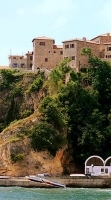
Old Town Ulqin - Ulcinj’s old town is a very well preserved castle looking community that is left over from medieval times. The old town sits atop a mountain overlooking the shore and is a tourist attraction on its own.
Market Days in Ulcinj -
Ulcinj Coastal Sea Pinjes - Adjacent to the Hotel Mediteran Resort, is a grove of coastal Sea Pinjes - actually Mediterraean confifers - both black and white pine - that extend all that way to Velika Plaza. These sea pines are rooted in local lore as being highly therapeutic and curative to all sorts of ailments. On summer evenings, the sea pine groves of Ulcinj are packed with visitors with sleeping bags and blankets, visitors planning to sleep under this restorative canopy.
Sveti Nikola Orthodox Cathedral - The cathedral is situated in the Old Town Ulqin area, and has an interesting history. When the Turks invaded, the monastery was converted into a mosque. It was later rebuilt as a church in 1890, in honor of the Montenegrin that died in the wars of 1878. Its interesting iconostasis is of Russian origin.
Valdanos Bay - Four nautical miles to the north of Ulqin, between Mavrijen and Mendra, lies the horseshoe-shaped Valdanos Bay.Its end points fall steeply and suddenly into the sea, and the beach is single, composed of round stones 1-20 cm in diameter, It is 600 m long and 20 m wide on average. Unlike other bays, this one is protected from both southern and northen winds and it often served to shelter ships during storms. In the depth of the bay in the middle of the beach, was the quarantine. In 1833 it was recorded that Ulqin brigantine sailed into Valdanos from Alexandria contaminated by some disease and by order of Ulqins harbormaster, she had to stay in quarantine for 40 days.Valdanos is reached both from sea and from land. Both the routs are interesting and beautiful, and depending on which one is selected , the beauty of the bay will be experienced in different manner.For a complete impression, we recommend coming by land and returning by sea.
Valdanos Olive Groves - According to tradition a man could not be married until he had planted at least one olive tree. For centuries Ulcinj has been an active olive-growing region, giving Ulcinj a reputation for fine olive oils. In the Valdanos area there are major parcels of land devoted to olive tree plantings. The Ulqini olive plantation (Ullishta), with 74,000 trees is the second largest on the Adriatic coast, most of it in one complex. The average age is over 300 years, and some of them date from the days of Ancient Greece (5th century B.C.). The old olive plantation have oil given species. The famous Ulqini olive oil, in amphoras earthenware pots, was a commodity worth its weight in gold, it was shipped to Trieste, Venice Rome, Cairo and into interior Shkoder, Shkup, Duklje, Rash, Prizren and so on. Ulcinj’s olive harvest season and edible oil production period typically begins in November and continues to February. During harvest the plantations reverberated with the singing of the pickers.
Ada Bojana - The Ada Boana (Ada Buna) area of the Ulcinj coast is a popular destination with travelers. Some of the most scenic portions of Velika Plaza (Long Beach) are here, along with the famed naturalist resort of the same name, and the daily fish catch at the mouth of the river make for some of the best seafood menus anywhere in the world. The banks of river Buna are also of interest, which feature wooden huts with strange fishing devices called Calimera - which allow fishing of the river only with nets. Ada Boana was created by accident, where in 1958 the schooner Merito helmed by Captain Naporeli, sank in the river near two small islets. Over time, sediments from the river settled around the sunken ship and the two islets, first forming a sandbar and ultimately creating the island we know today.
Bird Watching at the Ulcinj Salt Works Factory - This protected eco-system in Ulcinj is one of the world’s top birdwatching locations, since Ulcinj and its surroundings are major resting points for over 200 bird species on their migration paths. During the winter months, more than 20,000 birds including more than 200 species are typically nested here, including a rich variety of woodcocks, pelicans, ducks, cormorants, prey birds and songbirds, as well as extremely rare birds of the Montenegrin ornitoflora including the long footed goosefoot and Sheldrake.
Ulqini on Fri, 21st Mar 2008 10:33 am
More About Montenegro Regional Excursions
The Tara River - which emerges from the confluence of the Ospanica and Verusa Rivers in the Dinaric Alps of Montenegro, and flows 144 kilometers northward and converges with the Piva River near the Bosnian border to form the Drina River. The Tara River is the largest European supply of drinking water. The Tara River is not to be confused with Tara Mountain and Tara National Park, which are situated in southern Serbia.
Rafting on the Tara River - River rafting is a popular recreation activity in Montenegro, particularly on the Tara River. One popular rafting route, follows an 18 kilometer course starting from Brstnovica, that takes approximately three ours. Other rafting routes allows enthusiasts to follow much of the dramatic Tara River Gorge - Europe’s deepest gorge - passing near waterfalls, under bridges, near old Roman roads, and of course, through “white water” rougher waters for those that enjoy the most exciting of rafting trips.
Tara River Gorge - Also known as Tara Canyon, is the route of the Tara River, the deepest canyon in Montenegro and Europe, at 78 kilometers in length and 1,300 meters at its deepest. The canyon is protected as a UNESCO World Heritage Site, and is a part of Durmitor national park. In September 2006, a protocol for cooperation between the Slovenian company “Petrol” and Montenegrin company “Montenegro-bonus” was signed, and the building of an electric plant with initial power of 40 or 60 megawatts is planned for construction in the gorge.
Outdoor Club Podgorica - Information about mountain climbing and rock climbing in Montenegro at http://www.montenegroclimbing.net
Extreme Sports in Montenegro -
Photography Tours - Montenegro is a popular destination for photographers seeking to capture a unique sense of place, time, and circumstance. Setting as varied as mountaintop vistas, shimmering beaches, olive groves, historic towns and villages, and a fascinating local population, make for an interesting journey of images.
Cultural Tours -
Skadarsko Lake National Park - This enormous lake and national treasure of Montenegro is located about seven kilometers from coastal Ulcinj and the Adriatic Sea. The lake is approximately 44 kilometers in length and 14 kilometers in width. Interesting, two-thirds of Lake of Scadar is situated in Montenegro with the balance in Albania.
Ulqini on Fri, 21st Mar 2008 10:38 am
Ulcinj Restaurants
Ulcinj cuisine, and the area’s restaurants and cafes’, represent the diversity of the area’s historical, cultural, and maritime influences on this coastal community.
Any local would feel compelled to express that food is generally excellent at the area’s cafe’s, but it is the seafood in Ulcinj that is truly without peer anywhere.
The heritage of 2,000 years of maritime activities likely contributes to this local view, but the unique warmth of local waters, local recipe ingredients, and the “always fresh” availability of the day’s catch, also ensures that the local opinion has a solid foundation.
Ulqini on Fri, 21st Mar 2008 10:40 am
Ulcinj Entertainment
Entertainment options are plentiful in Ulcinj, reflecting Ulcinj’s role as the center of commerce, social activities, sporting events and participatory sports, as well as dining, club, and other night life in this coastal region.
Dining out with a view of the Adriatic as the sun sets, enjoying Ulcinj’s superlative seafood cuisine, is certainly a top form of entertainment.
More About Ulcinj Entertainment
JumpTV - TV Teuta from Montenegro - TV Teuta is the first television station in Montenegro to broadcast 80% in Albanian and 20% Montenegrin. Primarily broadcasts news and musical programs, with twice-weekly sports coverage.
Pro Beach Soccer Ulqini / Ulcinj - The Montenegro Open of Pro Beach Soccer has been a popular event for Ulcinj in recent years. The 2006 event was held in May, at Ulqin’s Small Beach. the pro beach soccer event is not only a sports event, but it is also a cultural and entertainment event. All participants, spectators, and celebrities who enjoy this sport, help make it a popular highpoint each season in Ulcinj. The event is typically covered by local Ulqin television, National television stations, satellite and by Internet feed.
View Beach Soccer Video